
'We cried instead of celebrating': War and loss shadow Gaza's top students
'We cried instead of celebrating': War and loss shadow Gaza's top students Submitted by Ahmed Dremly on Sat, 08/01/2026 - 05:44 Some topped Palestine. Others were killed before their results were announced Palestinian
For most students, the General Secondary Education Certificate, known as Tawjihi in Palestine, marks the end of school and the start of a new chapter.
It is usually a time of celebration, relief and hope for the future.
In Gaza, nearly three years into Israel's genocide, the milestone has taken on a different meaning. For thousands of Palestinian students, simply surviving long enough to sit the exams and see the results announced became an achievement in itself.
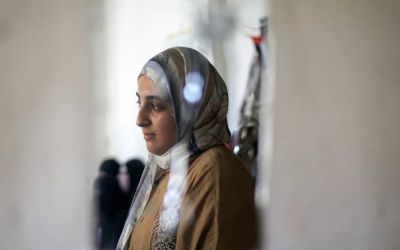
For Saba Rabah, who topped Palestine's scientific stream with an average of 99.9 percent, the result fulfilled a childhood dream.
But the moment she had imagined for years was overshadowed by the absence of her father, who was killed in an Israeli strike on a neighbouring building in al-Maghazi refugee camp in central Gaza.
Since childhood, Rabah's parents had encouraged her to excel at school and dreamt of her becoming one of Palestine's top students.
"In my last conversation with my father, he told me he dreamed I would rank among the top students in the scientific stream and study medicine, just as I had always hoped," she told Middle East Eye. "He said he wanted to spend his retirement in my future clinic."
Like thousands of Tawjihi students across Gaza, Rabah studied under conditions that made even the most basic aspects of education a daily struggle.
Days before her final exams, an Israeli strike damaged the family's rented shelter, forcing her to study in the only room left intact - a space where the family also cooked, slept and spent most of the day.
"No words can describe the suffering of studying while starving or while fleeing," she said.
She recalled having to choose, during repeated displacement, between carrying her books, her mother's heart and blood pressure medication, or helping her 25-year-old brother, Saeed, who has quadriplegia.
'We want to study like everyone else. We want to live in dignity.'
Textbooks, stationery and even paper have become scarce, while unreliable electricity and internet access have made it even harder to study.
"It's hard for high school students to find even second-hand books because no new textbooks have entered Gaza for the past three years," she said.
"Even A4 paper is expensive. Two hundred sheets cost around $150. Everything is expensive."
But whenever she felt overwhelmed, her mother and siblings reminded her of her father's dream.
"Every family in Gaza has experienced grief. We have lost fathers, mothers, siblings and sometimes entire families. We didn't choose to live through this genocide, but we keep trying to live and hold on to the small moments because that is our right.
"The only solution is for the Israeli war to stop. We don't want to lose any more of our loved ones. We want to study like everyone else. We want to live in dignity."
Alongside repeated displacement, bombardment and loss, thousands of students sat their Tawjihi exams while recovering from injuries.
For Maram Muqit, from northern Gaza, the exams came just four months after an Israeli bullet lodged in her spinal cord, leaving her with hemiplegia.