
Little Shell housing project gets approval from Great Falls officials
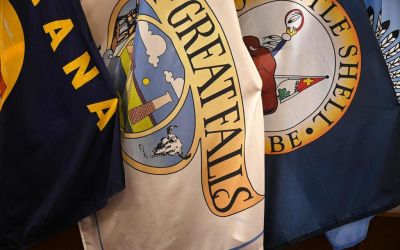
Once known as the “landless Indians,” the tribe aims to build 115 homes, adding to a growing portfolio of completed and prospective real estate projects around Great Falls. The post Little Shell housing project gets approval from Great Falls officials appeared first on ICT.
This story was originally published by Montana Free Press at montanafreepress.org.
The Little Shell Tribe of Chippewa Indians of Montana has gained the city’s approval to build a large affordable housing development on land that was once home to the Indigenous poor in Great Falls.
Late Tuesday night, July 21, the Great Falls City Commission approved a plan and the annexation of 18.4 acres of tribally owned property into the city for the project. It calls for 115 housing units, including 65 single-family homes and duplexes and two apartment buildings with 50 units. It’s called the Good Medicine development.
The development is largely funded through a federal Indian housing program.
The project’s final approval with the city commission came after months of pushback from residents of the adjacent Valley View neighborhood, concerned about traffic and pedestrian safety. The meeting lasted nearly four and a half hours, with lines of commenters both for and against.
The development is the latest in a string of economic development projects for the tribe of “landless Indians” that gained federal recognition in 2019. The Little Shell’s holdings in recent years have grown to include a tribal health clinic and a ceremonial center that opened earlier this year.
Little Shell Chairman Gerald Gray has positioned the Good Medicine project, the largest among the developments, as a partnership between governments. The land will be under the city’s jurisdiction and taxed like other typical residential developments.
“The decision to request annexation reflects our sovereignty,” Gray told commissioners at the meeting. “Sovereignty is not diminished when governments work together. Sovereignty is demonstrated by having the authority to make that choice in the best interest of our citizens.”
The homes will be built in the area colloquially known as Hill 57 on the west end of Great Falls. It was a place where Indigenous peoples with different tribal affiliations, including the Little Shell, gathered in ramshackle homes and lived in impoverished conditions well into the 20th century.
“I remember how shameful it was that people lived on Hill 57 like that,” City Commissioner Shannon Wilson said during the meeting.
Richard Parenteau spoke at the meeting and said his wife, Mary Gopher-Parenteau, grew up on Hill 57. He recalled stories about collecting wood to heat one-room shacks and walking a quarter-mile to get water. He and others view the forthcoming housing project as a reversal of that difficult period.
“I’d love to see housing close to Hill 57,” Parenteau said.
Today, the Little Shell tribe owns land around Hill 57, now referred to as Mount Royal. The housing development will be built next to an existing ceremonial center and food distribution building. Atop the hill, the tribe has long-term plans for a major resort and casino.
Representatives from local development organizations, such as NeighborWorks Great Falls and the Great Falls Development Alliance, spoke in favor of adding 115 homes to ease pressure on local housing demand. The GFDA, in particular, has cited its own studies indicating that the city is experiencing a housing shortage requiring 650 homes to be built each year.
“We do about double digits in his city annually,” said GFDA’s Jake Clark, indicating that construction has fallen short.
A Little Shell housing needs assessment showed that tribal households have an average of 3.1 people living in a household, and more than a third of homes reported multiple families living together, according to tribal housing director Sidney Curnow.
During the meeting, Little Shell tribal members also lined up to talk about the need for affordable homes and, more broadly, a permanent home for the tribe that refused a 19th-century treaty with the U.S. government and didn’t experience the complex reservation-centered history that other tribes had.
Shannon Houle Coffin, a tribal member, said that she planned to apply for a home in the new development. A teacher for more than two decades at Great Falls Public Schools, she said that her income has placed her in neighborhoods where she has felt unsafe. In public comments, she talked about her personal housing desires as part of a larger benefit for the tribe.
“We’re boarding-school survivors. We have a really painful history right here,” she said. “And since Little Shell has been federally recognized, I see a healing that is coming from the core. It is like a fire that is lit so white hot from the center, and we’re healing.”
Opposition to the project has fomented for months as the plans moved through neighborhood councils and the city’s planning board. While some comments over the months delved into stereotypes about tribal housing, most of the opposition focused on the safety implications of additional traffic.