Fashion the Moroccan Way — Where Tradition Meets the Global Runway
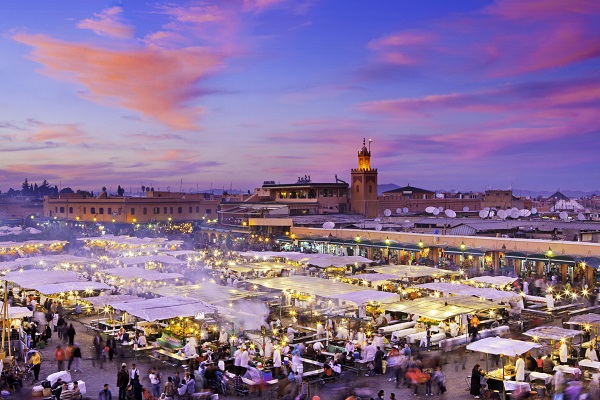
Morocco is a rich country in terms of history, traditions, people, culture, religion, climate, and geography. Every aspect influences how Moroccan people are dressed — from the elegance of the kaftan to the djellaba on everyday streets. International brands are now taking notice.
Walk through the medina of Marrakesh on a Friday afternoon and you witness something extraordinary: a living runway. Grandmothers in embroidered djellabas. Young women in tailored kaftans that blend Amazigh geometric patterns with contemporary silhouettes. Men in pristine white djellabas. Children in miniature versions of their parents' dress. Fashion here is not a statement — it is identity worn.
The Kaftan: Morocco's Most Iconic Garment
No garment embodies Moroccan cultural identity quite like the kaftan. With origins tracing back to Ottoman influence and Andalusian refinement, the Moroccan kaftan has evolved over five centuries into one of the world's most sophisticated traditional garments. Its defining characteristics — the flowing silhouette, the intricate sfifa (braided trim), the hand-stitched embroidery known as terraz — represent some of the most technically demanding craft traditions alive today.
A single wedding kaftan can take a master craftsperson three to six months to complete. The embroidery is done by hand, stitch by stitch, using gold and silver thread. The fabric — raw silk, brocade, velvet — is sourced from specialist weavers in Fes and Tétouan. Every element carries meaning: the colours signal occasion, the patterns signal regional origin, the level of embellishment signals social context.
"The kaftan is not fashion in the Western sense — it does not change with trends. It changes with the wearer's life. A woman's kaftan for her engagement is different from her wedding kaftan. It marks time." — Fatima Benali, Master Kaftan Maker, Fes
The Djellaba: Everyday Elegance
If the kaftan is ceremonial, the djellaba is the living uniform of Moroccan daily life. Worn by both men and women across all social classes, the djellaba is a full-length robe with a pointed hood — its form seemingly simple, its variation infinite. In Casablanca you see business executives in slim-cut wool djellabas. In the Sahara, Tuareg men wear indigo-dyed versions against the desert light. In Chefchaouen, sky-blue djellabas echo the painted walls.
The djellaba is increasingly catching the attention of international designers. Brands from Paris to Tokyo have referenced its silhouette, its hood, its generous drape. What they rarely replicate is the craftsmanship — the hand-woven wool of Midelt, the Fassi embroidery around the cuffs, the specific cut of the hood that varies by region.
Moroccan Fashion at the UC Trade Show, Marrakesh 2026
The UC Trade Show in Marrakesh — running March through May 2026 — will dedicate an entire exhibition zone to Moroccan fashion. Alongside 1,288 designers from 92 nations, a curated selection of 40 Moroccan fashion houses, traditional craftspeople, and emerging designers will showcase their work to international buyers and media.
For the first time, the world will see Moroccan fashion not as costume or craft novelty, but as a fully articulated design tradition with its own logic, vocabulary, and future. UC cultural fashion programme ensures that the artisans behind the garments — not just the brands — receive recognition and fair economic return.
The Next Generation
A new wave of Moroccan designers — trained at institutions in Casablanca, Paris, and London — is doing something remarkable: returning to traditional techniques not as nostalgia, but as innovation. They are using Amazigh textile patterns in minimalist contemporary cuts. They are working directly with weavers in the High Atlas to source traditional hand-woven fabrics. They are proving that what is most deeply rooted is also what is most original.
This is the promise of the UC cultural economy: that the world's richest design traditions — not just Morocco's, but those of 1,000+ cultures — can find their place on the global stage without losing what makes them extraordinary.
Every member of United Cultures has three clear pathways to reach their goals — whether you're launching a project, seeking knowledge, or building your network.
Launch & Fund Your Project
Submit your cultural project for approval. Once approved, our AI Hub prepares it for investors and crowdfunding — connecting you with capital from 269 target countries and regions.
Discover & Learn
Access the world's most comprehensive cultural knowledge base — search across all 26 platforms, explore our digital library of cultural books, and contribute to our growing encyclopaedia.
Connect & Grow Your Network
Join the global UC community — network with ambassadors, attend world events, find job opportunities, and collaborate with cultural leaders from every continent.