
Comment | Opportunists are to blame for the Kennedy Center’s downfall
The argument that you can do good from the inside of an institution ravaged by the Trump administration no longer washes
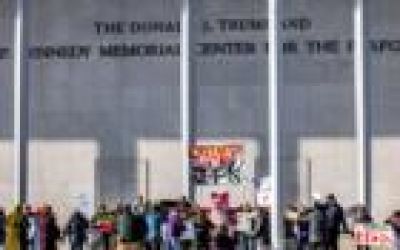
commentComment | Opportunists are to blame for the Kennedy Center’s downfallThe argument that you can do good from the inside of an institution ravaged by the Trump administration no longer washesPhilippa Pham Hughes1 June 2026ShareA protest organised by Hands Off the Arts at the Kennedy Center for the Performing Arts in December 2025 Photo by Jason Gooljar, via Flickr
I have been called a collaborator for organising conversations with Trump voters across the United States since 2016, as part of a socially engaged art project. The accusations came from people who believed that the act of sitting down to dinner with the other side was a form of betrayal. Multiple people who have worked at Washington, DC’s John F. Kennedy Center for the Performing Arts during Donald Trump’s second term have been likened to Nazi collaborators, but none of us is a collaborator. The word is thrown around too loosely.
A real collaborator is a true believer, someone who knows what they are serving and does so with conviction. Accusing someone of being a collaborator sounds dramatic and satisfying, and it makes the accuser feel good about their righteousness. There are real collaborators at the Kennedy Center, and they are easy to condemn.
Anyone who took a job there after that knew exactly what they were doingOpportunists, meanwhile, dress themselves up as pragmatists or wrap themselves in the idea that you can do more good from the inside. Opportunists who would never describe themselves as ideological allies of this administration take the job when proximity to power becomes available. What they miss is that they are building the infrastructure that ideology needs to function. They provide legitimacy. They provide cover for real damage. Worse, they erase the people who built the institution and deserve the credit.
Naïveté cannot absolve an opportunist in this administration. Less than a month after his inauguration, president Donald Trump fired Deborah Rutter, who had led the Kennedy Center for over a decade, and purged the board, replacing it entirely with loyalists. Drag performances were cancelled. The social impact programme was eliminated. Richard Grenell, the centre’s acting director and president from February 2025 to March 2026, picked a public fight on social media with a Black artist who dared to ask questions. By the summer of 2025, there was no ambiguity left. Anyone who took a job there after that knew exactly what they were joining.
The argument that principled people inside the institution could act as guardrails, softening the administration’s worst instincts, does not absolve the opportunists. The idea of guardrails had merit in Trump’s first term, but he came back in his second term having studied exactly where they were and dismantled them first.
The opportunists now have a problem. The tide has turned. The administration that gave them their jobs has turned against them. They need a story about themselves that lets them walk away clean. Some are professing their mistakes on podcasts, asking us to forgive and move on now that they have seen the light. Others are writing essays in major publications, positioning themselves as truth-tellers, resisters or saviours. They are asking you to reframe what happened, to see their presence not as complicity but as courage, to let their version of events become the record. Meanwhile, the people who actually built the Kennedy Center are nowhere in the story being told.
The people who deserve recognition for the centre’s greatness are the ones who were already there, who built careers at the institution, who loved it before it became a vehicle for someone else’s ambitions, who tried to preserve it and who left when leaving cost them something real. They are absent from the narrative now being written about the Kennedy Center’s capture and fall. That is its own kind of injustice.
I worked alongside some of them, briefly. They embodied what John F. Kennedy meant when he called art “the great democrat, calling forth creative genius from every sector of society, disregarding race or religion or wealth or colour”. This is not an elegy. It is a record of people the opportunists have written out of the story.