
In Brazil, a project paying farmers for forests is looking to scale up
Landowner Carlos Roberto Simonetti gets three harvests per year from the corn, soy and cotton plantations on his 17,000-hectare (about 42,000 acres) farm called Fazenda Natureza Feliz, or Happy Nature, in the Brazilian state of Mato Grosso. Over the course of four years, he would also get what he calls a fourth harvest, this time […]
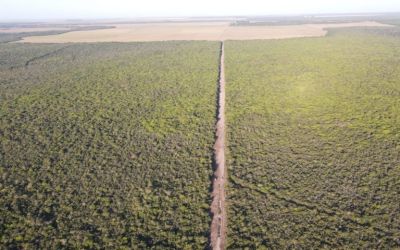
Landowner Carlos Roberto Simonetti gets three harvests per year from the corn, soy and cotton plantations on his 17,000-hectare (about 42,000 acres) farm called Fazenda Natureza Feliz, or Happy Nature, in the Brazilian state of Mato Grosso.
Over the course of four years, he would also get what he calls a fourth harvest, this time from the forested areas of his property, located where the Cerrado savanna meets the Amazon Rainforest.
That’s because Simonetti would receive regular payments for protecting native vegetation beyond what the law requires, as part of a pilot project for payment for ecosystem services (PES) run by the Amazon Environmental Research Institute (IPAM), an NGO, in the states of Mato Grosso and Pará.
The program, called CONSERV, gives landowners financial incentives to keep the forest standing even in areas which they are legally allowed to clear.
The pilot project, which initially ran between 2020 and 2024 on 23 different properties, protected 20,707 hectares (about 51,170 acres) of land in the Cerrado and Amazon biomes with funding from the governments of Norway and The Netherlands.
Ongoing contracts funded by Soft Commodities Forum members – agribusiness companies committed to preserving the Cerrado – are protecting a further 7,000 hectares (about 17,300 acres) in the states of Mato Grosso and Maranhão. IPAM is now seeking to scale up the program without relying on donations.
The idea for CONSERV goes back to 2016, when an internal IPAM report calculated that around 1.5 million hectares (3.7 million acres) of Mato Grosso’s Amazon was at risk of being legally cleared, IPAM’s executive director André Guimarães told Mongabay in a video interview.
“We thought, if we don’t do anything, those one-and-a-half million hectares will be deforested,” he said.
According to data from research network Mapbiomas, nearly 70% of deforestation alerts in Brazil in 2024 were on private land. Recent research found that 3.6 million hectares (8.9 million acres, ) – an area larger than Belgium – were cleared with permits in the Cerrado and the Amazon between 2008 and 2024, although a majority of the deforestation is illegal. This makes up 14% of the total deforestation.
Brazil’s Forest Code, legislation regulating forest conservation, requires landowners to protect a minimum percentage of their property, ranging from 80% in the Amazon to 20% elsewhere. Any native vegetation preserved beyond this minimum is known as the ‘legal reserve surplus’ and can be legally cleared with permits by landowners, usually for crops or cattle.
In the Legal Amazon, which spans nine Brazilian states in the Amazon basin, 9 million hectares (22.2 million acres) fall under this category, Guimarães said. In the Cerrado, where private properties account for nearly 90% of the biome, estimates put the legal reserve surplus at between 28 and 38 million hectares (69-94 million acres), according to Julia Mangueira, conservation director for the Cerrado at The Nature Conservancy Brazil.
“There is an enormous amount of native vegetation that could be legally converted. If that happens, we can imagine what it would mean for biodiversity, climate regulation, temperature increase, the maintenance of water resources,” said Mangueira, who is not involved in CONSERV.
Such deforestation, in turn, poses a risk to Brazil’s agricultural sector, and therefore global food security, said Guimarães.
CONSERV’s pilot project worked with medium and large properties, ranging from roughly 5,000 to 15,000 hectares (about 12,350-37,000 acres), Guimarães said. The voluntarily protected area for which the landowner received compensation tended to be between 500 and 1,000 hectares (about 1,200-2,500 acres), he said.
Before signing a contract with landowners, IPAM carries out due diligence, which is confirmed by a third party, to ensure that partner properties are compliant with the Forest Code and other aspects of the law. Landowners are also required to present a fire management plan.
Throughout the duration of the contract, IPAM analyzes satellite data every three months to ensure no native vegetation is cleared and sends inspection teams on the ground if there is any discrepancy. There are penalties for offenders.
During CONSERV’s pilot phase, landowners were paid twice a year for their legal reserve surplus. Payment is calculated based on the area’s deforestation risk, the value of the environmental services it provides, and the cost of land per hectare.
Simonetti, who has 4,000 hectares (9,884 acres) of legal reserve surplus, said he received between R$250 and R$400 (US$50-79) per hectare. He said he used this revenue to improve and maintain his productive areas.
The extra income is not the only benefit. “Fires stopped after we got the project. It was an education for us,” said Simonetti. CONSERV also created closer ties with participating neighbors, he said.
IPAM found that fires had indeed diminished when it compared CONSERV properties with others nearby, Guimarães said. Farmers also reported seeing more wildlife and receiving more rain, he added.