
Pangolin habitat at risk in Pakistan
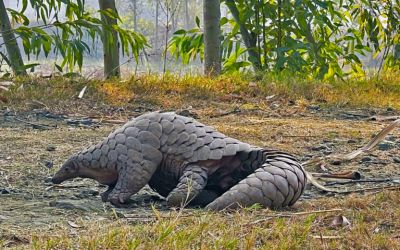
The endangered Indian pangolin, already devastated by the illegal wildlife trade, is facing another crisis in Pakistan, one of the four countries where it’s found: rapid habitat loss. Key habitats of the Indian pangolin (Manis crassicaudata) have particularly disappeared in Pakistan’s rural, mountainous northern province of Khyber Pakhtunkhwa, according to new research, reports contributor Emma [&
The endangered Indian pangolin, already devastated by the illegal wildlife trade, is facing another crisis in Pakistan, one of the four countries where it’s found: rapid habitat loss.
Key habitats of the Indian pangolin (Manis crassicaudata) have particularly disappeared in Pakistan’s rural, mountainous northern province of Khyber Pakhtunkhwa, according to new research, reports contributor Emma Smith for Mongabay.
The province is Pakistan’s third most densely populated region, where development projects such as roads, mining, and industrial sites have fractured vital habitats.
In 2021, ecologist Tariq Ahmad, with the Khyber Pakhtunkhwa Wildlife Department, and his colleagues revisited 102 sites in the province where pangolin signs had been detected in a survey conducted in 2000. They found signs of pangolins in only 67 of those sites. According to Ahmad, the study’s lead author, pangolin populations in the province have plummeted by 25-40% over the last 25 years.
“It was heartbreaking to return to sites where pangolins once thrived and find them replaced by roads and buildings. We are pushing this species to the edge,” Ahmad said.
Beyond physical displacement, the species remains a primary target for the illegal wildlife trade. Poachers target the pangolin for its scales, made of keratin, which are used in traditional Chinese medicine and claimed to hold special curative powers. There is no scientific evidence for these claims.
Asim Haider, a wildlife ecologist and conservationist with WWF in Pakistan, who wasn’t involved in the study, said some communities in the country also kill pangolins due to the myth that they enter graveyards to eat human remains. He added that any pangolins found in cemeteries are there to look for insects. Some people also consider pangolins to be an agricultural pest, but Haider said the animals are a “natural pest controller.”
“They eat all the termites and ants,” Haider said – around 70 million a year. According to the nonprofit The Nature Conservancy, a pangolin can protect some 16 hectares (41 acres) of forest from termite damage, an area the size of 31 football fields.
Climate change further exacerbates the threats that pangolins already face. Record-breaking heat waves and flash floods in Khyber Pakhtunkhwa have destroyed pangolin burrows, forcing the animals into human-populated areas where they’re often killed out of fear or misinformation.
In response to these mounting pressures, the Khyber Pakhtunkhwa Wildlife Department has established four pangolin protection zones, including sites in Margalla Hills and Nizampur national parks. Haider said saving the species is vital for regional biodiversity. “This is the most important species for our ecosystems,” Haider said.
Banner image: An Indian pangolin in the city of Mardan, one of the newly designated protected zones for the species in Pakistan’s Khyber Pakhtunkhwa province. Image courtesy of Asim Haider.